Monday, September 24, 2012

Wave Jack Series: Fighting Piracy With Pin-Up Girls

Video game companies have always been designing schemes to encourage consumers to purchase their software mint in the shrink wrap and discourage piracy.  Before first day pre-order bonuses, before Working Design pack-ins, before Star Tropic had you dip the manual in water, there was the Wave Jack series.

Published by Imagineer for the Famicom Disk System, these open-ended titles pushed passive players to be more proactive in searching out clues, not only in the 8-bit world itself, but also in the materials included with the disk. These ranged from simple maps to detailed guidebooks by living gaming legends to music cassettes featuring trending idols. A promising project on paper, in execution the trilogy was a buggy, unfriendly, unbeatable mess not unlike Atari’s Swordquest experiment. 
The adventure kicked off on November 6th, 1986 with Ginga Densho, aka Galaxy Odyssey. Set in a distant future of space colonies and interstellar travel, an ominous meteor shower rains down an unknown skin-calcifying virus, and you must scour the galaxy in search of the cure. Each of the five planets begins with a vertical-scroll shooting stage where you gather oxygen for the top-down exploration segment set deep within the alien star. 
The Guardian Legend this ain’t. Spaceship sequences feel tacked-on and half-baked compared to competent contemporaries like Super Star Force which was released just a week afterward. The exploration bits are hamstrung by finite oxygen resources, copy-pasted screens, and game-freezing bugs, making this a kusoge by our modern rubric. Despite its fatal flaws, the opulent packaging drummed up enough interest to move a few units.   
Relatively unknown sci-fi manga artist Okazaki Tsuguo provided the character designs while teen superstar Oginome Yoko lent her voice to the theme song Romantic Odyssey. The lyrics, in conjunction with the instruction manual written as a prose novella, supposedly contain clues for deciphering the in-game space runes left behind by extinct civilizations—a DIY Al Bhed primer. There’s even a 10-page pamphlet from the Japanese Psychoeducational Institute extolling the benefits of these mental gymnastics on a growing mind to scam parents into buying more edutainment for their family computer.  
Imagineer’s sophomore effort, Kieta Princess (Missing Princess) is considered the strongest entry in the trilogy, albeit a confusing mess. The princess of the imaginary country Rabia (or Labia, depending on how you romanize it) is kidnapped during a goodwill visit to Japan, putting the kibosh on trade—specifically, the vaccine for an incurable virus running rampant across the archipelago. As a private eye employed by the government, you have thirty days to find the missing princess and restore international relations.

Thirty in-game days, mind you. The clock ticks forward relentlessly as you scramble for clues and resources in a completely free-roaming world. You can interact with nearly every building on the congested map, go to the martial arts dojo to boost your life total, or even take on a part-time job to supplement your daily stipend. But don’t dawdle. Come nightfall, shops close and the streets are overrun by pistol-toting gangs. Get too trigger-happy in self-defense and you’ll be arrested and slapped with a fine.

Missing Princess tried to do more than the infant technology could handle. Years later, once hardware grew up to fit the design, sandbox games become a cornerstone of the medium. Until then, players were left to sift through the litterbox. 
At least they didn’t have to dig in with their bare hands. The package came with a police badge notebook, map of the city (whose backside served as a poster of the game’s token idol), travel log by Mori Meijin (mousy rival to Takahashi Meijin), and vocal tracks by actress Tomita Yasuko who had recently been launched to stardom by her role in Lonely Heart (Sabishinboh) by Hausu director Obayashi Nobuhiko. 
Finally we have Holy Sword Psycho Calibur, the most competent of the trifecta for what it's worth. Released on May 15th, 1987, this quest puts you in control of a young orphan on a journey to find his father and unravel the secret of his mother’s memento, an ancestral sword. Aided by the fairies Pipi and Popo, you must make the sacred blade shine once more to free the land from the Demon Lord Hrungnir and his hundred-year rule of terror.   
Don’t let the flip-screen overhead view and sword-slinging fool you—this isn’t Zelda’s long-lost cousin, it’s the mutant twin confined to rot in the attic. Right from the offset the player is asked to purchase equipment that will make or break their adventure without any explanation or context, making it a blind crap shoot amongst an already aimless sprawl. Good thing there’s pack-in guides, right?
Well, not so much. There’s a storybook illustrating the history of the realm, a Bikkuri-Man style monster manual, and cassette tape soundtrack needed to solve the musical Lost Woods riddle hiding the true last boss. Very fancy, but not useful in divining what items do. Do cherries restore health? (No, they’re actually bombs.) Is it worth dropping all your rubles on a teardrop? (Yes, it’s an over-powered boomerang). The game is still playable if you factor in the vintage. Do you enjoy the perilous learning curve of Rougelikes and poor hit detection of lazy programming? Then you’re in for an import gaming treat.

The rest of us can enjoy the totally sweet cassette illustration by Kamen Rider Black RX monster designer Amemiya Keita and the screamin’ saxophone accompanying smalltime idol unit Poppins on Springtime in the City Means Adventure. 
Citing low sales given the high production costs, Imagineer pulled the plug on the Wave Jack series after just three titles. Their 5000 yen price tag—normally reserved for cartridge games—was highway robbery compared to other Disk System offerings. Thanks to the proliferation of disk writers, you could download new games for 500 yen a pop at the corner store after an initial 2000 yen investment for the blank disk. With A+ titles like Castlevania, Kid Icarus, and Metroid at their fingertips, kids would be insane to spend their lunch money anywhere else. Even idols, normally the sexy deciding factor in the war for young boys’ pocket money, lost their luster in light of bootleg porn games, including Bishojo SF Alien Fight and other NSFW titles

Ironically, Wavejack’s pack-ins were originally devised to fight such unlicensed disks through added value. Rogue agents quickly figured out how to bypass Nintendo’s lax copy protection systems, with the Disk Worker from Hacker International being the workhorse of choice for counterfeiters. The Famicom homebrew scene hit a growth spurt with mooks dedicated to Disk System mods, blurring the line between hobbyist and hacker pirate. 

Despite the ease of piracy and format obsolescence from advances in ROM carts, the Disk System enjoyed a robust life cycle, cranking out titles and providing disk writing services through 1993, three full years after the release of the Super Famicom. The Wavejack series is a fondly remembered footnote in Japan for what it could have been, while hardly known in the west due to the language barrier. Still, there’s enough clues scattered across the internet to start hearty enthusiasts down the right path. After all, a journey isn’t an adventure unless it’s into the unknown. 

Special thanks to Mind Rot for introducing me to Poppins and putting this post into motion.
Images of packaging and pack-ins taken from StrategyWiki.

Monday, September 17, 2012

Von Jour Caux: The Philosopher's Stone

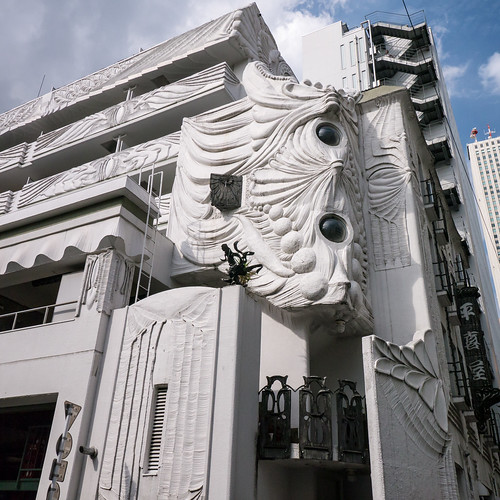
If use of space is one of the pillars that architectural design is built upon, than Von Jour Caux warps that very foundation.
2012  (1 of 1)-18
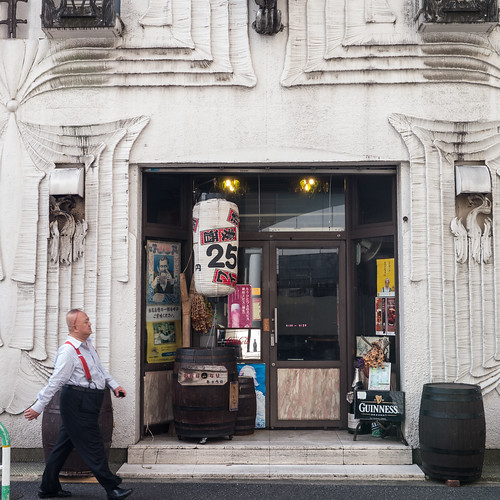
The Philosopher's Stone contemplates the streets of Ikebukuro.
Born January 27th 1934 in Asakusa, Tokyo as Toshiro Tanaka, he studied architecture at Waseda University and the School of the Art Institute of Chicago. Following a tour of  New York and Mexico, he returned home to draft apartment, offices, and resorts—very conventional, very boring.

Seeking spiritual fulfillment, in 1971 he turned his back on the business world to reinvent himself as Von Jour Caux, leader of a troupe of artists and craftsmen known as Art Complex. They took the nouveau riche country by storm, completing over ten major projects until society’s appetite for extravagance vanished with the mid-90's housing bubble . Private residences, condominiums, nursing homes—while the decorations by gaudy, the structures themselves never be wasteful, with the Philosopher's Stone being one of their most eye-catching offerings.

Come along with us on a guided tour of the crown jewel of bizarre Tokyo architecture.

2012  (1 of 1)-19
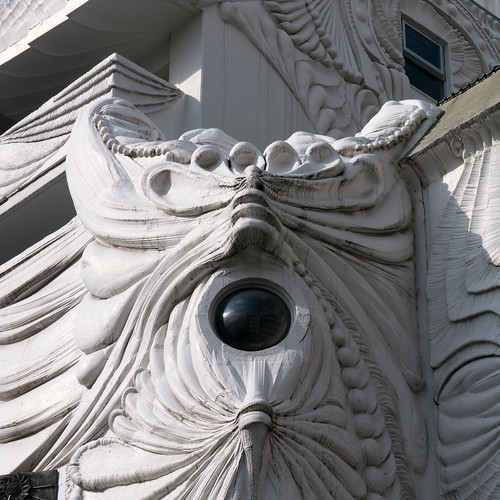
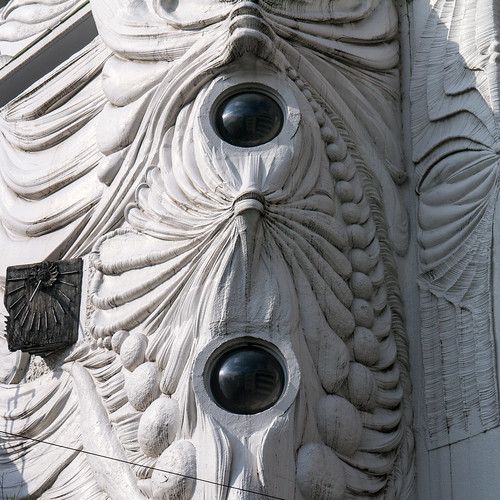
Organic insect shapes molded into the edifice.

2012  (1 of 1)-10
Detail of the front.
2012  (1 of 1)-16
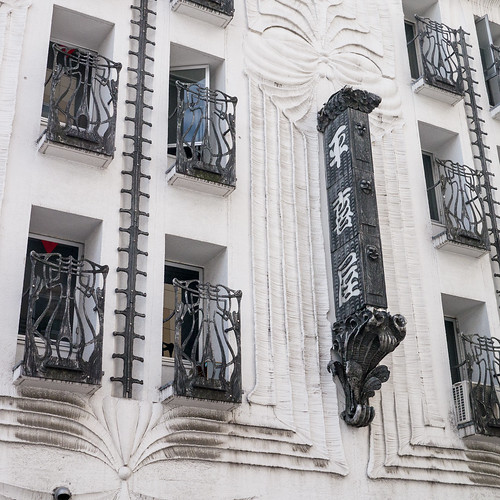
The building is owned by the sake manufacturer Hirakiya.
2012  (1 of 1)-15
The first floor is open for business and pedestrian traffic.
2012  (1 of 1)-5
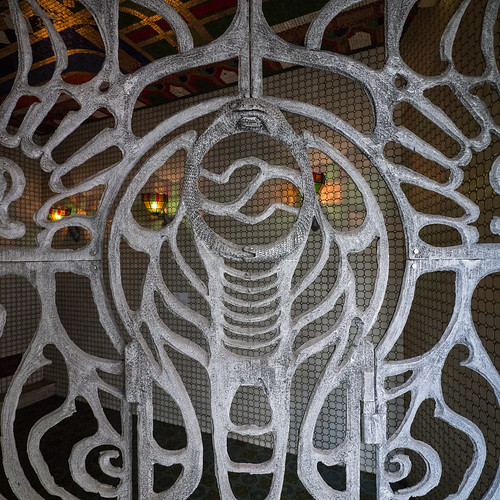
Sinuous snake details on the wrought iron entrance gate.
2012  (1 of 1)-6
Ouroboros before he got played out.
2012  (1 of 1)-21
The waiting room for your trip to a Gaudi-inspired dreamscape.
2012  (1 of 1)-12
Another serpentine motif in the tiled fresco above the elevator.
2012  (1 of 1)-7
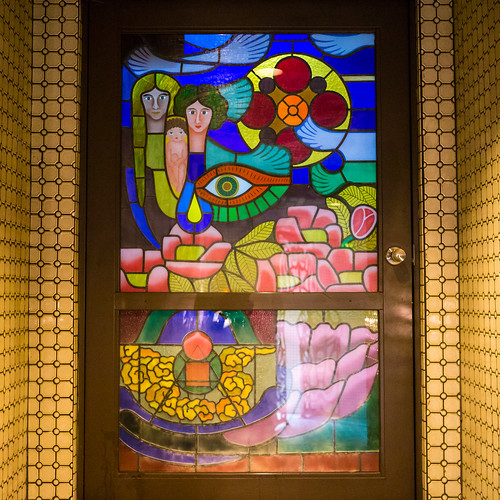
The secrets of creation are well guardedthis locked door is as deep as you go.
2012  (1 of 1)-8
Open-mouth ceramic tubes sprout from the walls like mushrooms.  
2012  (1 of 1)-9
The hand lamps saturate the room with warm shadows.
2012  (1 of 1)-11
At a distance, the slick walls shine like snakeskin.
2012  (1 of 1)-3
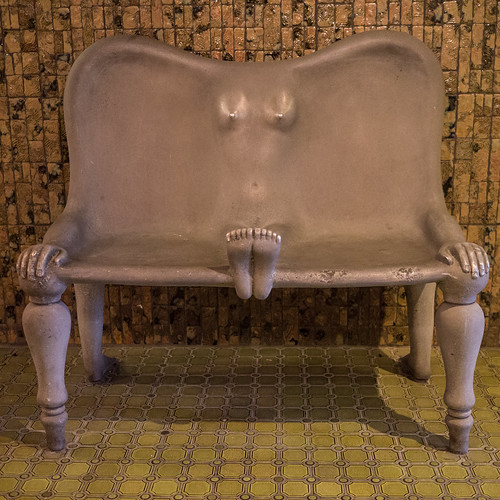
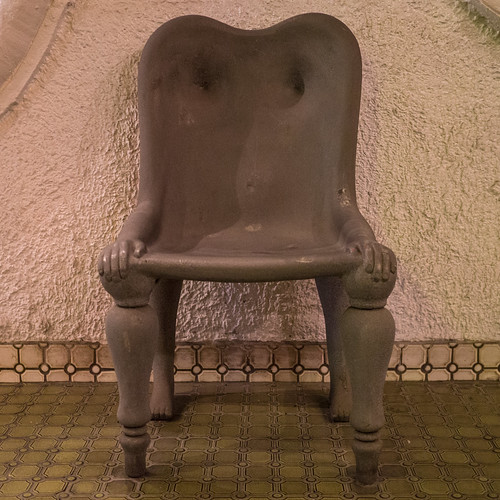
The backrest is surprisingly ergodynamic.
2012  (1 of 1)-4
Sit and ponder exactly how and why this place was built.
2012  (1 of 1)-13
The project's codename was Raga Chakras, as illustrated by this  ceiling pattern informed by Hindu mandalas.
2012  (1 of 1)
More ruminations on the origins of life.
2012  (1 of 1)-2
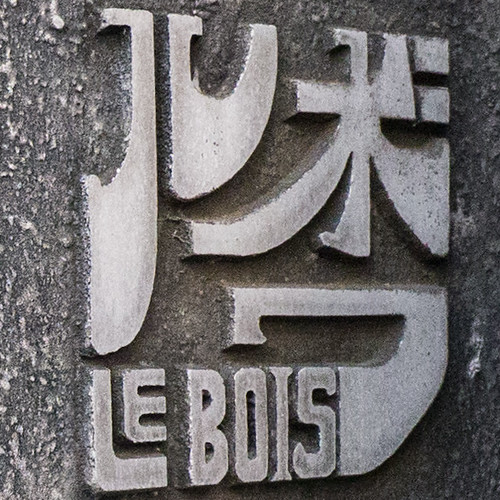
Inscription on the outside is French for "the forest." 
Though technically a private residence, the unlocked front gate is irresistibly inviting. You're more likely to run into another shutter bug than building security. Still, we ask that you use common sense and respect the property.

Directions:
From Ikebukuro Station, head straight out of the Center East exit and proceed down the right side of the main road. On the fifth block you will pass a Detour coffee shop. Turn right at this corner and the building is down the street on your right.

Address:
Toshima-ku, Minami Ikebukuro 2-29
(豊島区南池袋2-29)
Google Map

Special thanks to Tokyo Damage Report's awesome Tokyo Tour Guide for the tip!

Monday, September 10, 2012

Creepy Kids Songs Part 3: Satchan

Our songs up until now have been fairly innocuous ditties dragged into dark places by BBS denizens with the free time to match their sadistic imaginations. The final installment is something more raw—this true tale of sadness is a knife to the heart twisted by internet muck raking. 

That Satchan / Is really named Sachiko
But she calls herself Satchan / 'cuz she's so small
I feel silly with / Satchan

That Satchan / She really loves bananas
But she can only eat half / 'cuz she's so small
I feel sorry for / Satchan

That Satchan / Is she really going far away?
But she'll forget about me / 'cuz she's so small
I feel sad without / Satchan
Memorial to Satchan at Minami Osaka Kindergarten.
Satchan was penned in 1959 by Osaka-born Sakata Hiroo(阪田寛夫),  author of children's books known for his Japanese translations of The Adventures of Tintin. Years later in an interview with literary magazine Shunkan Bunshun, he admitted that TV personality and estranged boyhood friend Agawa Sawako (阿川佐和子) was the inspiration for the lyrics. He soon backpedaled, stating that Satchan was actually a transfer student from his preschool that had health problems.

This is where Satchan gains a life, or rather an un-life, of her own.

The lyrics reveal that Satchan was a sickly child. Everything starts fine with the first stanza. By the second, she's too feeble to handle an entire banana. And at the end of the song, she goes far away—recall from Toryanse that “to go” is a homonym for “to pass away.” I feel sorry for Satchan. I feel sad without Satchan. These genuine feelings of emptiness are the foundation of Japanese ghost stories and transmit clearly to their recipient beyond the grave.

Satchan is no longer an inhabitant of this world, if she even was to begin with. Kid's names are normally written using the round, friendly hiragana system, but the “Sa” in Satchan is inexplicably rendered with sharp, aggressive hiragana characters, suggesting the cramped scribblings or claw marks of some foreign entity imitating human script. 
From Teke-Teke, starring AKB48's Oshima Yuko. The horror!
All signs point to Satchan being an incarnation of the yokai Teke-Teke. Satchan is so small and can only eat half a banana because she herself is only half a body. As the Teke-Teke story goes, a young girl has her legs run over by a train, either from slipping off the platform or in a botched suicide attempt. She survives the dismemberment only to suffer a slow, agonizing death. The lower body is never recovered.

Hence the vengeful spirit of the Teke-Teke haunts suburbia at night in search of her lost legs, a torso scuttling on its arms at speeds of up to 150kph. Those unfortunate enough to be caught meet the same fate as her—she slices the victim in half at the waist with a wicked scythe.

Satchan's transformation from benevolent childhood playmate to relentless wraith seems to be a recent one. Her backstory shares too much in common with other urban yokai to be an organic creation—bullet train speeds of the human-faced dog Jinmenken, leg-stealing ala the Red Shoes ghost story, bladed weaponry borrowed from the purse of a split mouth Kuchisake Onna.

There's even a rumored fourth verse inviting Satchan to come out and play, a chain letter element obviously cribbed from the blockbuster hit The Ring. It goes something like this:

That Satchan/ A train took her legs
But she's coming back / 'cuz she wants yours
I'll see you tonight / Satchan
I should have mentioned this earlier. Satchan will pay a midnight visit to whoever lays eyes on these cursed lyrics—unless they can find the hidden fifth and final verse within three days to put her spirit to rest. The clock is ticking, dear reader.
From Hell Teacher Nube, a favorite of our buddy Velocitron.

Tuesday, September 4, 2012

Creepy Kids Songs Part 2: Kagome Kagome

Our second dreadful dirge warns of murderous in-laws, global conspiracies, and treasure best left buried. You're never too young to learn that someone is always watching you, so fit in or pay the price. 


Basket basket / Bird in a cage
When will it go free / At the eve of the dawn
The crane and turtle slipped
Who's that behind me?
Children playing Kagome Kagome
Beware: Children at play! (Source)
Kagome Kagome is a cryptic nursery rhyme in the vein of Ring Around the Roses. Children join hands and slowly circle around the blindfolded “it” while chanting. When the singing stops, the “it” tries to guess who is standing behind them. If they’re correct, the two swap places and the game continues.

The song’s mysterious origin and vague lyrics have made it a topic of tireless speculation, with each analysis more macabre than the last. It all hinges on how you interpret the eponymous kagome.
Ikido Edo execution.
Public execution like ikido dissuades others from falling out of line.
Typically kagome means "basket," though it can also be a perversion of kakome, “to surround.” This makes the bird in a cage a prisoner in jail. Written with different kanji characters, “at the eve of dawn” reads “the dawn patrol” (夜明けの番人) who have come to escort the accused to their execution—if the crane and turtle, symbols of longevity, take a fall, then death is certainly not far behind.

Or kagome may derived from kagomi (籠女) for "pregnant woman"—literally ”basket lady” for the extra abdominal baggage. In this gruesome interpretation, the unborn child (bird in a cage) becomes a ticking time bomb in an inheritance squabble. Rather than risk sharing the windfall with their family member to-be, the in-laws plot to push the wife down the stairs in a forced abortion. Be sure you can trust those at your back.
Four Symbols from Chinese constellations.
The Four Symbols from Chinese constellations. (Source)
The rabbit hole only gets deeper from here. Viewed through the lens of New Age spirituality, the bird becomes the soul confined to the trappings of flesh, yearning for escape. The eve of the dawn will usher in the next stage of human existence incited by a world-changing event prophesied by Chinese astrology—namely, Genbu, the Black Tortoise of the North and Suzaku, the Vermillion Bird of the South slipping, a metaphor for the inevitable shift of the earth's magnetic poles and ensuing chaos.
Kagome-mon hexagon pattern.
The kagome-mon pattern.
Don't be so fast to write this off as mere tinfoil-hat speculation—the Zionist threat is real! Though what it represents is up for debate. The hexagon cross-work pattern of kagome wicker basket coincides with the Star of David, conjuring up images of Illuminati plots or the Committee of Three Hundred's hidden hand corralling us into cages of the mind like the cattle we are.

A more likely conspiracy theory posits that the kagome acts as a treasure map to the buried gold of the Tokugawa clan. In 1868, the shogunate abdicated rule to the emperor, thus bringing a close to the bloodless Meiji Restoration. Though ousted from his castle and stripped of power, Tokugawa had the last laugh—the penniless new government was banking on funds from the war chest to rebuild the country, only to find that the riches of the vaults had been moved elsewhere!
Kagome reveals Tokugawa's buried gold.
Connecting the dots between Sado Kinzan Gold Mine, Edo Castle, and Toki Shrine, then Akechi Shrine, Senpu Castle, and Nikko Tosho-gu Shrine.
The search to uncover this lost fortune continues through the present, fruitless even with the help of modern science. Kagome Kagome may be the secret tech in cracking the mystery. Draw a line between the six areas closely connected to Tokugawa Ieyasu, the first Tokugawa shogun, and the points form a hexagram—this narrows down the search.

Next, assume that the bird in a cage hints at the location of the treasure. Logically it would be in the center of the hexagram, though once again wordplay offers a different interpretation. Tori meaning "bird" is nearly a homonym for torii shrine gate. This makes the most likely location Nikko Tosho-gu Shrine where Ieyasu is entombed. The final puzzle pieces are the tortoise and crane statues in the shrine's southern park. At the eve of the dawn, their sunrise shadows will converge, revealing the precise location of the treasure.
Crane and Turtle Park at Nikko Tosho-gu.
Follow your nose to history-altering revelations. (Source)
With the answer so obvious, what's keeping work crews from excavating the site? If you are willing to believe in the truth in the rhyme, you must also accept its warning. On an etymological level, kagome is derived from kago no me—"the eyes of the cage." Someone is watching to make sure that the secrets of the shogunate remain deep in the ground. Someone standing right behind you.
その目だれの目
Whose eyes are those eyes? (Source)